On Sunday, I had planned to do just one thing: get the ESP32-S3 AI voice conversation prototype I was building’s microphone and speaker debugged.
In my imagination, AI had already given me a shopping list; I just needed to buy the ESP32-S3, INMP441 microphone, MAX98357 amplifier, and speaker, connect them, and then all that remained was writing code and debugging.
Once I actually started working, I discovered things stopped before the code.
I had all the items on the list, but couldn’t connect them
I first picked up the INMP441, ready to wire it according to the tutorial. Only when I had the physical module in front of me did I realize the pins weren’t soldered on at all. The PCB only had two sets of solder holes, and the package contained a separate 6-pin header strip.
Without soldered header pins, there was no reliable place to connect jumper wires. And I had neither a soldering iron nor solder wire on hand. The microphone debugging I had planned to start came to a halt right there.
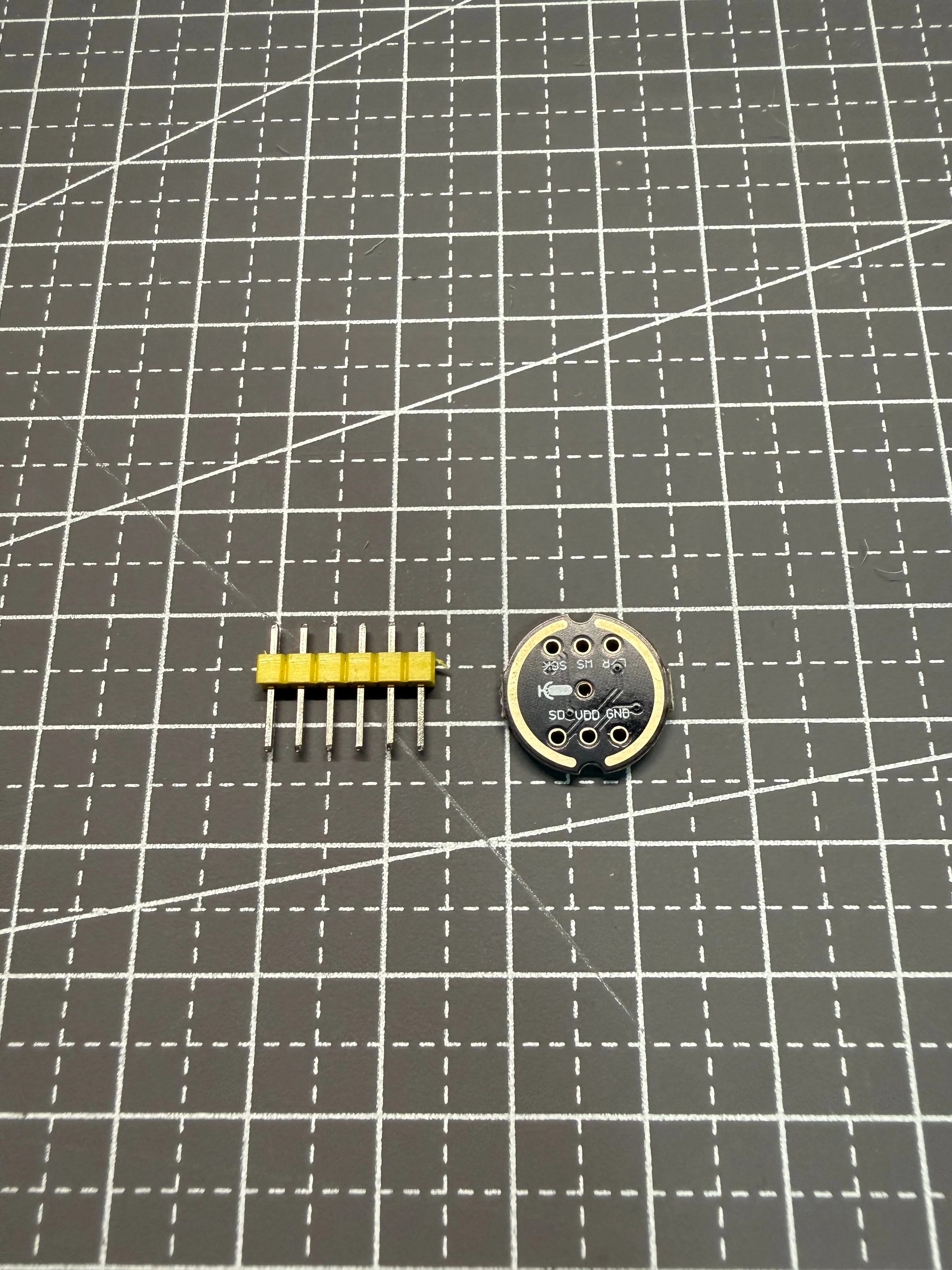
Un-soldered round INMP441 microphone module with the 6-pin header strip included in the package.
So, I started researching soldering irons.
People online gave completely different advice: some recommended Huanghua or Hakko, while others said a cheap Airuize or Delixi for a dozen yuan would suffice. I was initially drawn to portable soldering irons, but worried about the durability of the Type-C connector over long-term use.
I spent about two hours browsing online and still couldn’t figure out the differences between these products. Then I changed my approach: instead of comparing specs first, I watched how people actually completed a soldering job.
After seeing the hands-on operation, I began to understand why temperature control matters. Because I don’t like replacing tools soon after buying them, I eventually chose a soldering station based on the C245 solution. Concerned about having pets at home, I also bought lead-free solder wire.
Buying the soldering station didn’t mean the end of my problems.
I turned to deal with the speaker and found that the white plug of the 3525 cavity speaker and the green screw terminal on the MAX98357 module couldn’t match directly. To connect these two, I had to keep learning what terminals are, their specifications, how to install them, and then find suitable adapters.
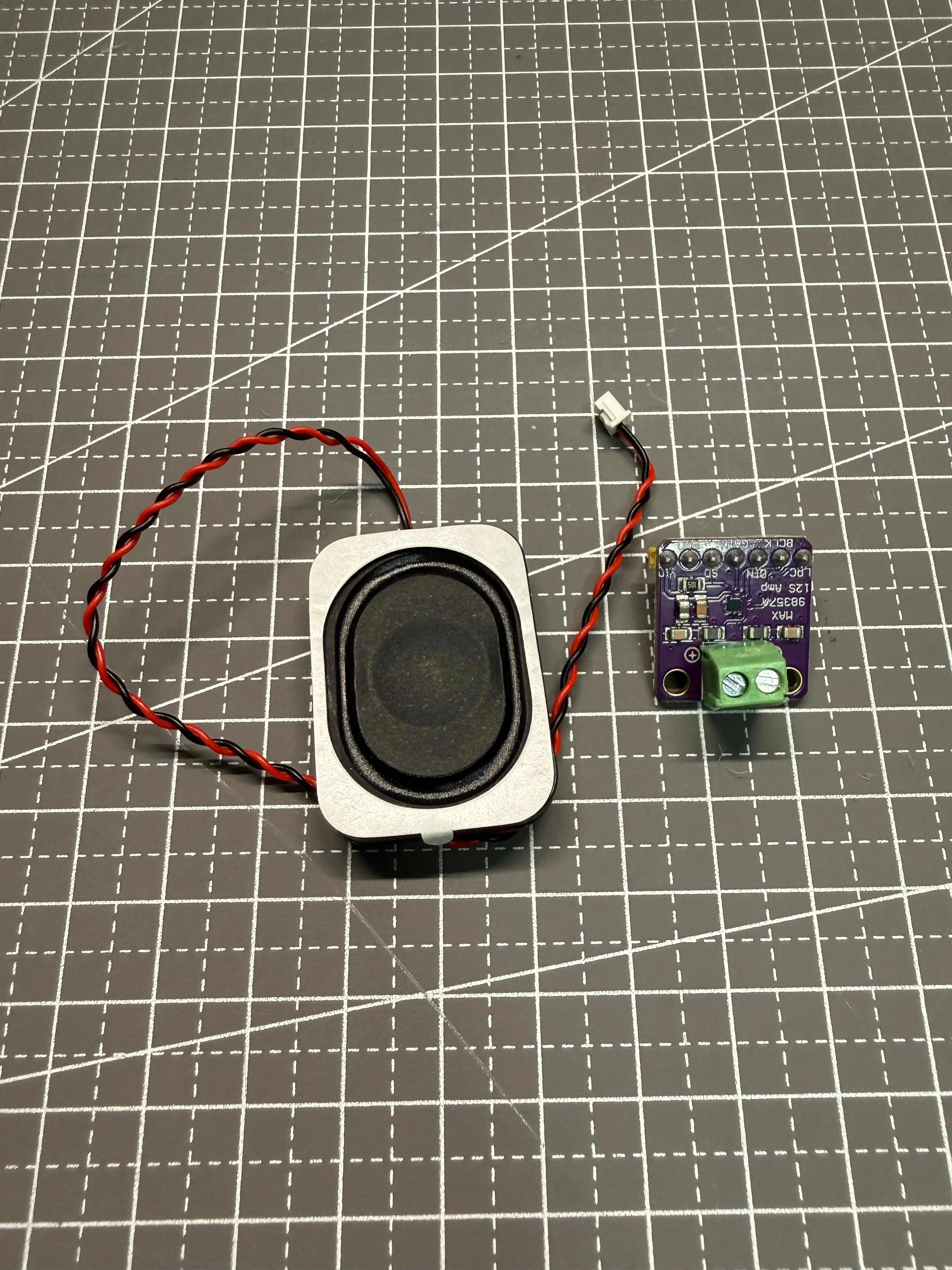
A cavity speaker with a white two-pin plug and a MAX98357A amplifier module with green screw terminals.
Installing the terminals still couldn’t avoid soldering. To hold parts in place, I also bought 704 silicone rubber; worried that I might ruin the project PCB on my first attempt, I added a soldering practice board as well.
That day, I didn’t write a single line of code. I bought more tools and materials, but the voice function still didn’t move forward.
AI turned out not to be so ‘reliable’ after all
When I discovered the microphone had no soldered pins and the speaker terminals didn’t match, I suddenly realized: AI wasn’t that reliable after all.
This ‘unreliability’ doesn’t necessarily mean the hardware list it gave was wrong. The list specified which functional modules the system needed, but it couldn’t handle all the specific differences for an inexperienced person: whether the received modules had pin headers soldered, what specification the plugs were, whether the two parts could be connected directly, and what tools and consumables were needed for a first soldering job.
The same component name in the list, when it lands in your hands, may come with different interfaces, different soldering states, and different assembly methods. AI can describe a seemingly complete route, but the person actually doing the work still has to verify the board in front of them, this plug, and this wire.
AI is most valuable when the problem has already become specific
This day also didn’t lead me to conclude that ‘AI isn’t suitable for learning hardware.’ On the contrary, every problem I encountered was still understood faster with AI’s help.
When the problem was merely ‘how to make a voice robot,’ all it could give me was a rough route. But when I narrowed the problem down to ‘why can’t this INMP441 connect to Dupont wires,’ ‘why can’t these two terminal types match,’ and ‘what should I prepare for my first soldering,’ AI’s answers became much more useful.
It can’t verify all physical details through the screen for me, nor can it choose components, solder, or test for me. But when I hit a specific obstacle, it can help me quickly know what to look up, compare, and verify next.
AI’s capabilities also depend on the person using it
This practice made one thing clearer to me: the stronger AI becomes, the more important the user’s judgment becomes. If I can’t tell the difference between product images and the actual item in hand, don’t know the difference between ‘not yet verified’ and ‘already succeeded,’ and don’t check interfaces and power conditions, then even the most detailed answer might be misused by me.
When a person already has some foundation, knows how to describe problems, verify conditions, and judge results, AI can indeed significantly amplify the speed of learning. But these abilities can’t be gained just by reading AI answers; they have to grow through one real operation after another.
This is also the learning approach I’m now more willing to accept: not expecting AI to take me through everything in one go, but first letting it help me get to the next step; when new physical problems arise, then learn, judge, verify, and continue.
On the surface, that day’s project progress was about zero: neither the microphone nor the speaker debugging goals were completed.
But I began to understand that learning to use AI and learning hardware are actually the same thing—neither can rely entirely on ready-made answers. What I need to do is not lower my own abilities and hand all decisions to AI; rather, I should strengthen my judgment through continuous practice, then use AI to amplify that ability.
AI can help me know faster what to do next, but the work still has to be finished by me.